
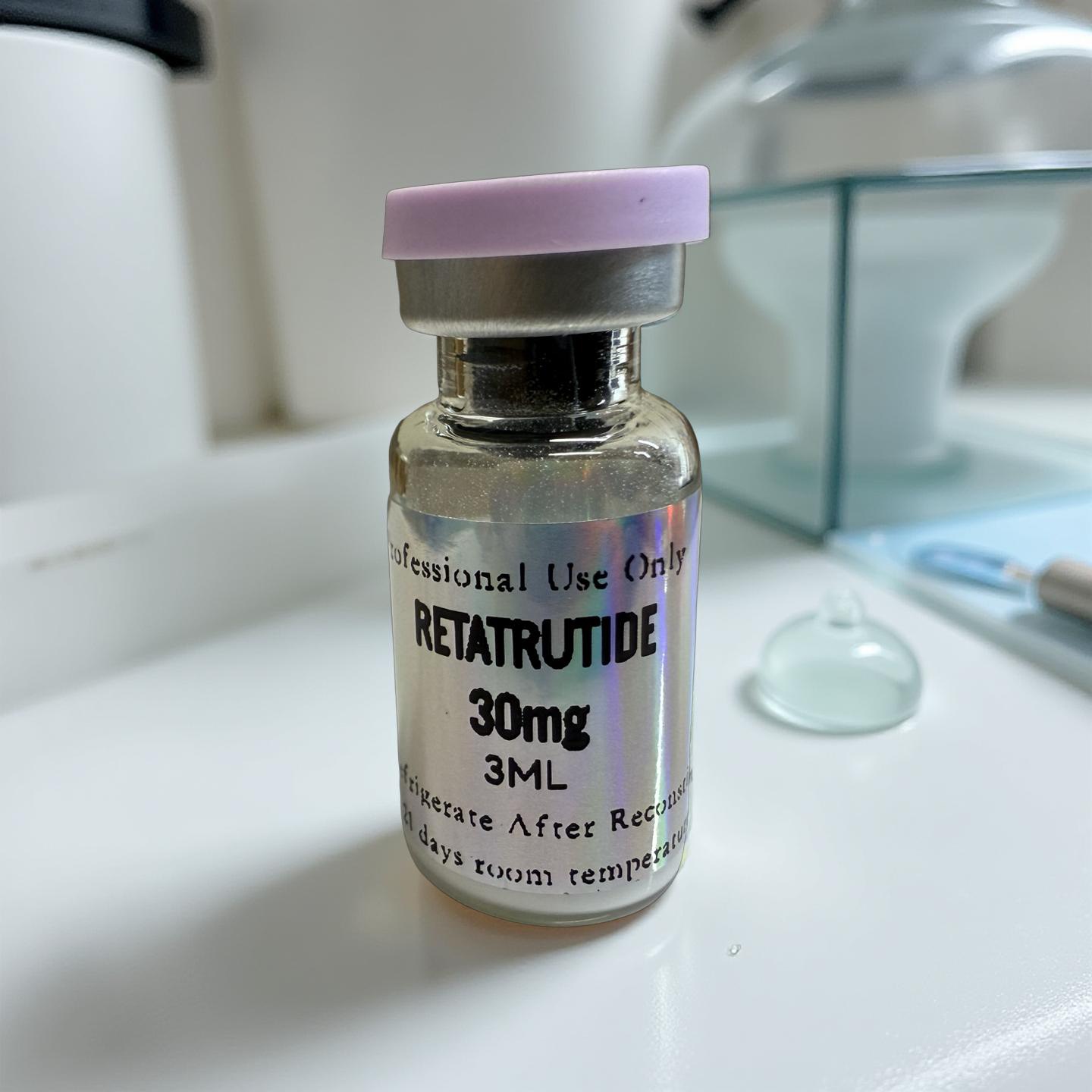
Retatrutide
$135.00
GLP3-R Receptor Research – Triple Receptor Agonist: GLP3-R (LY-3437943)
GLP3-R (LY-3437943) is a novel investigational peptide drug that acts as a triple agonist of the glucagon-like peptide-1 (GLP-1), glucose-dependent insulinotropic polypeptide (GIP), and glucagon receptors. This mechanism distinguishes it from currently available GLP-1 receptor agonists (e.g., GLP1-S) and dual agonists (e.g., GLP2), by adding glucagon receptor activation, which may enhance energy expenditure, lipid metabolism, and weight reduction in addition to appetite suppression and glycemic control (Coskun et al., 2022).
In phase 2 clinical trials, GLP3-R demonstrated unprecedented efficacy in weight management. Participants with obesity (without diabetes) achieved a mean weight reduction of up to 24.2% at 48 weeks, with many individuals losing more than 25% of their baseline weight (Jastreboff et al., 2023). In patients with type 2 diabetes, GLP3-R treatment produced dose-dependent reductions in both body weight (up to ~16.9%) and glycated hemoglobin (HbA1c), with decreases as great as –2.02 percentage points compared with placebo (Frias et al., 2023).
Beyond obesity and diabetes, GLP3-R has shown potential in reducing hepatic steatosis. In a substudy of patients with obesity and nonalcoholic fatty liver disease (NAFLD), the majority of individuals on higher doses experienced near-complete resolution of excess liver fat within 48 weeks (American Diabetes Association, 2023).
The safety profile of GLP3-R is broadly similar to other incretin-based therapies. The most common adverse effects include gastrointestinal symptoms such as nausea, vomiting, diarrhea, and constipation, which are generally dose-dependent and mitigated with gradual dose escalation. Other reported effects include mild increases in heart rate and rare elevations in pancreatic enzymes (Frias et al., 2023; Jastreboff et al., 2023).
Currently, GLP3-R is under evaluation in the TRIUMPH phase 3 program, which is designed to assess its long-term efficacy and safety in obesity, type 2 diabetes, cardiovascular disease, and related comorbidities. If successful, regulatory approval is anticipated around 2025–2026, positioning GLP3-R as a potentially transformative therapy in the management of metabolic disease (Lilly, 2024).
GLP3-R : Structure

Sequence: YA¹QGTFTSDYSIL²LDKK⁴AQA¹AFIEYLLEGGPSSGAPPPS³
Molecular Formula: C₂₂₁H₃₄₃F₁N₄₆O₇₀
Molecular Weight: 4,731.33 g/mol
PubChem SID: 474492335
CAS Number: 2381089-83-2
Synonyms: GLP3-R, LY-3437943, NOP2Y096GV, Triple agonist: GIP / GLP-1 / glucagon receptor agonist
Source:
Coskun et al., 2022 (Cell Metabolism)
Wikipedia – GLP3-R (accessed 2025)
Synthachem, 2024; Wikipedia – GLP3
PubChem Database
Wikipedia – GLP3-R; Chem databases
Jastreboff et al., 2023 (NEJM)
Why GLP3-R Is Gaining Research Interest
Within the field of metabolic science, researchers increasingly recognize that complex physiological systems cannot always be fully explained through single-pathway interventions. GLP-3R compounds represent a more integrative research approach by engaging multiple hormonal signaling systems at the same time.
Rather than isolating one receptor, GLP3-R allows researchers to observe how GLP-1, GIP, and glucagon signaling interact concurrently. This has positioned the compound as a key investigational tool in exploring coordinated metabolic regulation, energy flux, and endocrine signaling dynamics.
In research settings, this multi-receptor activity provides insight into:
Cross-talk between hormonal signaling pathways
Mechanisms regulating energy expenditure alongside intake signaling
The role of glucagon receptor activation in metabolic balance
How simultaneous receptor engagement alters feedback loops
Because of this, many investigators consider triple-agonist peptides a potential evolution beyond single-mechanism compounds purely from a research design standpoint.
Mechanistic Overview: How GLP3-R Functions in Research Models
To understand the scientific relevance of GLP3-R, it is helpful to examine the individual receptor pathways it engages. Each receptor contributes distinct signaling properties, and their combined activation creates a coordinated experimental profile.
GLP-1 Receptor Activation
In research settings, GLP-1 receptor signaling is commonly examined for its role in:
Gastric emptying modulation
Central appetite signaling pathways
Glucose-responsive endocrine responses
GLP-1 agonism provides a foundation for studying satiety-related neural signaling and gut-brain communication mechanisms.
GIP Receptor Activation
GIP signaling plays a role in:
Metabolic homeostasis
Insulinotropic response modeling
Nutrient partitioning pathways
The inclusion of GIP receptor engagement allows researchers to explore how insulin sensitivity and substrate utilization shift under dual or triple agonist conditions.
Glucagon (GCG) Receptor Activation
The glucagon receptor is often associated with:
Energy expenditure pathways
Lipid mobilization processes
Hepatic signaling models
Its activation in the presence of GLP-1 and GIP signaling is of particular interest, as it permits investigation into how energy output and substrate breakdown respond when catabolic signaling is engaged alongside appetite and glucose modulation mechanisms.
In combination, these pathways allow GLP3-R to function as a coordinated experimental probe, offering insight into how multiple hormonal systems can be synchronized within metabolic research frameworks.
Observations From Investigational Studies
Across experimental research environments, scientists have documented several notable observations when studying GLP-3R compounds. These findings are descriptive, not prescriptive, and are reported strictly within controlled study designs.
1. Body Mass Regulation in Research Models
In peptide-focused investigations, GLP3-R has demonstrated pronounced effects on body mass parameters. Researchers attribute these changes to combined influences on intake signaling and energy expenditure rather than a single isolated mechanism.
2. Glucose Handling and Insulin Signaling
Research models examining glucose regulation have shown alterations in glucose tolerance and insulin signaling pathways. These changes are useful for studying broader metabolic network behavior rather than clinical outcomes.
3. Lipid Utilization and Fat Metabolism
Glucagon receptor engagement has allowed researchers to observe shifts in lipid mobilization and fat oxidation pathways, supporting its use in lipolysis-focused investigations.
4. Energy Expenditure Dynamics
Unlike peptides that focus exclusively on intake modulation, GLP3-R enables investigators to evaluate how energy output changes concurrently within metabolic systems.
5. Systems-Level Synergy
The most notable element of GLP-3R research is not any single pathway effect, but rather the synergistic behavior that emerges when all three receptors are activated simultaneously.
Research-Grade Purity and Handling Standards
When sourcing GLP3-R for laboratory work, purity, consistency, and documentation are critical. Licensed Peptides focuses on supplying high-purity research compounds intended solely for qualified investigators and laboratory environments.
All materials are:
Produced under strict quality control processes
Packaged for professional research handling
Distributed for investigational use only
No products are marketed or intended for ingestion, injection, or therapeutic application in any living organism.
Frequently Asked Questions (FAQ)
1. What is GLP3-R in research terminology?
GLP-3R is a research designation commonly used to describe triple-agonist compounds like GLP3-R that activate GLP-1, GIP, and glucagon receptors simultaneously.
2. Is GLP3-R approved for medical or veterinary use?
No. GLP3-R remains under clinical investigation and is not approved for human or animal use by any regulatory authority.
3. Why do researchers study triple-agonist peptides?
Triple-agonists allow scientists to examine integrated metabolic signaling rather than isolated pathways, offering a more complete systems-biology perspective.
4. Does GLP3-R affect appetite signaling in research models?
Yes. Research indicates that GLP3-R engagement influences central and peripheral appetite-related signaling pathways in experimental settings.
5. How does GLP3-R differ from GLP-1-only compounds in studies?
GLP-1-only compounds engage a single pathway, while GLP-3R compounds allow simultaneous examination of appetite, glucose regulation, and energy expenditure signaling.
6. Are gastrointestinal effects observed in research?
Some studies report gastrointestinal responses such as delayed gastric signaling, which are commonly documented in peptide research involving GLP pathways.
7. Can GLP3-R be used in combination studies?
Yes. Researchers often include GLP3-R in multi-compound research designs to explore interaction effects across metabolic systems.
8. Does GLP3-R influence metabolic flexibility in studies?
Research observations suggest altered substrate utilization patterns, making it valuable for metabolic flexibility investigations.
9. How long do GLP3-R effects persist in research models?
Findings suggest cumulative effects with continued receptor engagement, allowing researchers to study longer-term signaling adaptations.
10. Is GLP3-R intended for diagnostic or therapeutic use?
No. GLP3-R compounds are for research purposes only and are not intended for diagnostics, treatment, or performance use.
11. Why is glucagon receptor activation important in GLP3-R studies?
It allows researchers to explore energy expenditure and lipid metabolism alongside appetite and glycemic signaling.
12. Is GLP3-R considered safe?
Safety profiles are still being established in ongoing studies. All work should occur in controlled laboratory environments following ethical research standards.
13. Why is GLP3-R supplied as an LPS-free peptide?
GLP3-R is produced as an LPS-free peptide to reduce the risk of endotoxin-related interference in receptor signaling studies, cellular assays, and biochemical experiments where immune activation could confound experimental data.
14. What does endotoxin-free mean for GLP3-R research applications?
An endotoxin-free peptide indicates that GLP3-R meets stringent contamination thresholds, supporting reliable outcomes in sensitive in-vitro and ex-vivo research systems that require minimal background inflammatory signaling.
15, Are GLP3-R research peptides endotoxin tested?
Yes. Research peptides are endotoxin tested as part of quality assurance protocols to verify compliance with laboratory standards and to support experimental consistency across research applications.
16. How does high purity benefit GLP3-R research studies?
High-purity GLP3-R reduces variability caused by synthesis by-products or contaminants, allowing clearer interpretation of receptor interactions and signaling behavior within controlled experimental environments.
ALL ARTICLES AND PRODUCT INFORMATION PROVIDED ON THIS WEBSITE ARE FOR INFORMATIONAL AND EDUCATIONAL PURPOSES ONLY.
The products available on this website are intended solely for in-vitro research purposes (Latin: “in glass”), meaning they are used in experiments conducted outside a living organism. These products are not medicines or drugs, have not been evaluated or approved by the U.S. Food and Drug Administration (FDA), and are not intended to diagnose, treat, cure, or prevent any disease or medical condition. Any administration to humans or animals, whether by ingestion, injection, or other means, is strictly prohibited by law.