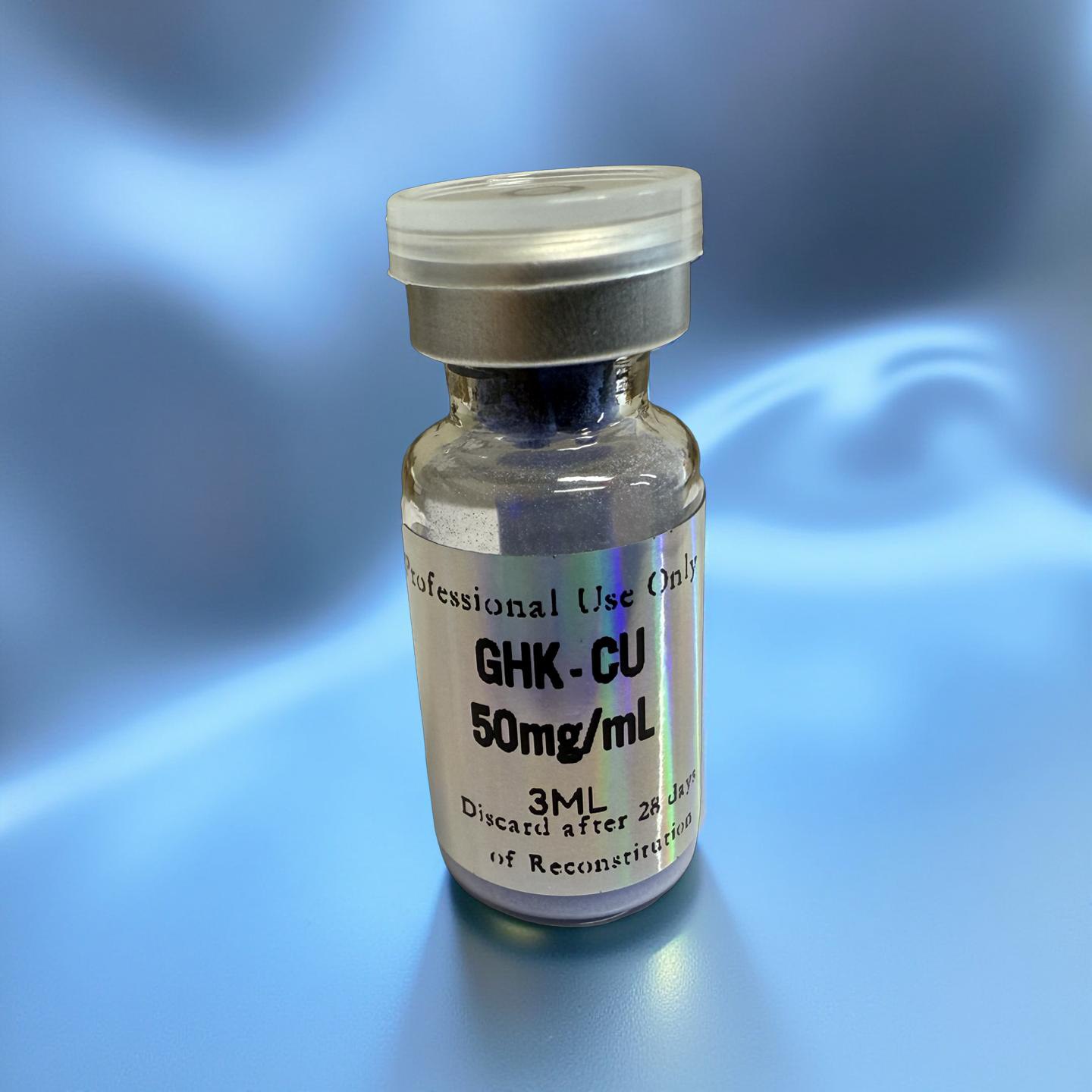
GHK-CU 50mg
$80.00
Overview
Research Peptide for Tissue Signaling and Structural Biology Studies
GHK-Cu is a naturally occurring peptide found in plasma, urine, and saliva. Studies suggest it promotes wound healing, immune function, and skin regeneration by stimulating collagen production, fibroblasts, and angiogenesis. It also acts as a tissue injury–related feedback signal and exhibits antioxidant activity by reducing free radical damage.
GHK-Cu : Structure
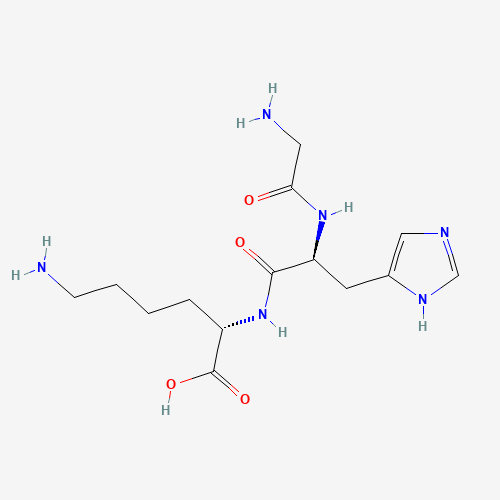
Sequence: Gly-His-Lys·Cu·xHAc
Molecular Formula: C14H23CuN6O4
Molecular Weight: 401.91 g/mol
PubChem CID: 73587
CAS Number: 89030-95-5
Source: PubChem
Biological Characteristics and Research Background
GHK-Cu is classified as a bioidentical peptide-copper complex, meaning it mirrors molecules naturally present in mammalian systems. Laboratory research has shown that its concentration decreases with age, which has led researchers to examine its regulatory role in tissue maintenance and repair signaling. Within experimental models, GHK-Cu has demonstrated the ability to influence numerous biochemical cascades simultaneously rather than acting upon a single isolated pathway.
Preclinical studies using controlled environments suggest that GHK-Cu may act as a feedback signaling agent released during tissue damage. Once present, it may help coordinate immune cell recruitment, stimulate fibroblast activation, and modulate oxidative stress responses. These findings position the peptide as a unique multi-functional compound for laboratory study, particularly when exploring how tissues respond to injury, inflammation, and structural degradation.
Observed Functions in Research and Experimental Models
1. Extracellular Matrix Regulation
Numerous in vitro studies demonstrate that GHK-Cu can upregulate the synthesis of extracellular matrix proteins, including collagen and glycosaminoglycans, within cultured fibroblast populations. These findings suggest that GHK-Cu may play a regulatory role in maintaining tissue architecture following injury or stress within controlled laboratory systems.
2. Fibroblast Activation and Proliferation
Experimental models indicate that GHK-Cu interacts with fibroblast signaling pathways, leading to enhanced cellular activity related to tissue repair. Fibroblast stimulation is a critical factor in wound-healing research, making GHK-Cu particularly valuable when studying connective tissue regeneration.
3. Angiogenesis-Related Activity
Research conducted in animal models suggests that GHK-Cu participates in angiogenic signaling. By influencing factors associated with new blood vessel formation, the peptide has been used experimentally to study how tissues restore nutrient and oxygen delivery following trauma or ischemic conditions.
4. Antioxidant and Oxidative Stress Modulation
GHK-Cu has demonstrated antioxidant activity in laboratory experiments. Data suggest it may assist in mitigating oxidative stress by reducing free-radical-induced cellular damage. This property has made it of interest in studies focused on cellular aging, environmental stress responses, and inflammatory chain reactions.
5. Gene Expression Modulation
Advanced research has shown that GHK-Cu can influence gene expression profiles associated with tissue remodeling and inflammation control. Transcriptomic analyses suggest that hundreds of genes related to cellular survival, repair mechanisms, and anti-inflammatory responses may be modulated through its presence in experimental systems.
Relevance in Hair and Skin Biology Research
Within laboratory settings, GHK-Cu has been frequently examined in relation to hair follicle biology and dermal tissue modeling. Research suggests it may influence follicular microenvironments by enhancing nutrient exchange pathways and reducing inflammatory markers around follicular cells. Studies also indicate that the peptide can affect hair cycle signaling pathways in experimental models, contributing to its popularity in hair regeneration research.
Additionally, its impact on dermal density, elasticity markers, and extracellular matrix organization has led to widespread use in dermatological research formulations designed for controlled testing.
Why GHK-Cu Continues to Attract Research Interest
Researchers value GHK-Cu for its capacity to influence multiple biological systems simultaneously. Rather than producing superficial or isolated effects, the peptide appears to act at a regulatory level, affecting structural proteins, signaling molecules, and cellular communication processes.
Its long research history, combined with reproducible laboratory findings, has positioned GHK-Cu as one of the most extensively documented copper peptides in cellular biology literature. Its consistency in experimental outcomes has enhanced confidence in its use as a research compound across various disciplines.
Research-Grade Supply Standards
Licensed Peptides provides high-purity, research-grade GHK-Cu produced under strict quality control standards. All materials are intended strictly for laboratory research, analytical testing, and scientific investigation. Products are not approved for human or animal use and are supplied solely for experimental and educational purposes.
Each batch is handled with professional care, packaged securely, and distributed with discretion to support laboratory compliance and controlled research environments. Ordering and fulfillment processes are streamlined to ensure timely delivery of research materials without compromising integrity or quality.
Frequently Asked Questions (Research-Focused)
What is GHK-Cu?
GHK-Cu is a copper-binding tripeptide complex used in experimental research to study cellular repair, signaling pathways, and tissue remodeling mechanisms.
Why is GHK-Cu examined in regenerative research?
Because it has demonstrated the ability to influence fibroblast activity, extracellular matrix organization, angiogenesis, and oxidative stress responses in experimental models.
Is GHK-Cu naturally occurring?
Yes. It is an endogenous peptide-copper complex identified in biological systems, which is why it is classified as bioidentical in research literature.
Does GHK-Cu influence collagen pathways in studies?
Laboratory data indicate that GHK-Cu can stimulate collagen synthesis and regulate matrix integrity in cultured cells and animal research models.
Why is copper important in GHK-Cu research?
Copper is an essential cofactor for many enzymatic and cellular processes. Binding copper to GHK enhances the peptide’s biological signaling activity in experimental settings.
Is GHK-Cu studied for hair follicle biology?
Yes. Preclinical research suggests that GHK-Cu may influence follicular microcirculation, inflammatory signaling, and growth-phase regulation in experimental systems.
How quickly are changes observed in research models?
Results vary depending on the study design, dosage, and model used. Cellular and molecular changes are often observed over several weeks in controlled experiments.
Is GHK-Cu considered stable?
When properly formulated and stored, research-grade GHK-Cu demonstrates adequate stability for laboratory experimentation. Stability may be affected by pH and environmental conditions.
Can GHK-Cu be combined with other compounds in research?
Yes, it is often studied alongside other peptides, antioxidants, or signaling molecules to observe synergistic or modulatory interactions under controlled conditions.
What distinguishes GHK-Cu from GHK alone?
GHK is the base peptide, while GHK-Cu includes copper ions bound to the peptide, which significantly enhances its biological activity in research models.
Is GHK-Cu suitable for long-term research studies?
Current data suggest it does not overstimulate cellular pathways, making it appropriate for extended observational studies in laboratory environments.
What does LPS-free mean in relation to GHK-Cu research peptides?
LPS-free indicates that the GHK-Cu peptide has been tested to confirm the absence of lipopolysaccharides, which are bacterial endotoxins that can interfere with experimental outcomes, particularly in cell-based and molecular signaling studies.
Why is endotoxin-free status important for research peptides?
Endotoxins can activate unintended inflammatory or stress responses in experimental systems. Using an endotoxin-free peptide helps ensure that observed effects are attributable to GHK-Cu itself rather than external contaminants.
How are research peptides endotoxin tested?
Research peptides such as GHK-Cu are commonly evaluated using validated assays (e.g., LAL testing) to quantify endotoxin levels, ensuring compliance with laboratory standards for sensitive experimental applications.
What is meant by high-purity GHK-Cu in research settings?
High-purity GHK-Cu refers to peptide material that has undergone rigorous synthesis and purification processes, resulting in minimal impurities. This level of purity is critical for reproducibility, accuracy, and reliability in biochemical and molecular research studies.
GHK-Cu : Research
Wound Healing & Tissue Remodeling
Enhances collagen (types I, III, IV, VII) and glycosaminoglycan (dermatan sulfate, chondroitin sulfate) synthesis; stimulates decorin—a key proteoglycan for ECM structure.
Acts as a chemoattractant, drawing macrophages, mast cells, and capillary/endothelial cells to injury sites
Promotes angiogenesis via upregulation of VEGF and bFGF, and enhances proliferation of endothelial cells (HUVECs)
Animal studies demonstrate accelerated healing in rats, rabbits, mice, and pigs: faster wound closure, granulation tissue, angiogenesis, and reduced inflammatory markers (e.g., TNF-α, MMPs)
A synergy with hyaluronic acid (HA) was shown: when combined at a 1:9 ratio, GHK-Cu + low-molecular-weight HA boosted collagen IV synthesis by 25× in fibroblasts and 2× in ex vivo skin models
GHK-Cu and Bacterial Infections
One of the major challenges in wound healing is the invasion of tissue by pathogenic microorganisms, which can significantly delay or prevent repair. Bacterial and fungal infections are particularly problematic in burn patients and individuals with compromised immune function (e.g., diabetes, HIV). When combined with specific fatty acids, GHK-Cu forms a potent antimicrobial complex effective against a range of bacteria and fungi that commonly impair wound healing.
Clinical research in diabetic patients has demonstrated that GHK-Cu outperforms standard care regimens in the treatment of diabetic ulcers. Patients receiving both standard care and GHK-Cu exhibited approximately a 40% increase in wound closure and a 27% reduction in infection rates compared to controls. Comparable benefits were also observed in patients with ischemic open wounds.
GHK-Cu and Pain Reduction
Preclinical studies in rats demonstrate that GHK-Cu produces dose-dependent analgesic effects, partly through elevating endogenous pain-modulating amino acids such as L-lysine and L-arginine. These findings suggest potential for non-opioid, non-NSAID approaches to pain management, avoiding the adverse cardiovascular and addictive risks associated with conventional therapies. GHK-Cu shows minimal side effects and good oral and subcutaneous bioavailability in animal models, though dosing data in rodents cannot be directly extrapolated to humans.
GHK – Cu : Scientific Journal & Authors
Loren Pickart, Ph.D., has authored over 100 publications and is actively developing patents related to GHK. His work includes investigations into the peptide’s impact on the expression of more than 4,000 human genes. Beyond its reported applications in skin inflammation, metastatic cancer, and COPD, GHK also shows potential benefits for the nervous, gastrointestinal, and mitochondrial systems. In his autobiography, Dr. Pickart outlines the motivations and background that shaped his lifelong focus on skin biology, anti-aging research, and regenerative science.
Referenced Citations
GHK Peptide as a Natural Modulator of Multiple Cellular Pathways in Skin Regeneration
Effects of Tripeptide Gly-His-Lys in Pain-Induced Aggressive-Defensive Behavior in Rats
ALL ARTICLES AND PRODUCT INFORMATION PROVIDED ON THIS WEBSITE ARE FOR INFORMATIONAL AND EDUCATIONAL PURPOSES ONLY.
The products available on this website are intended solely for in-vitro research purposes (Latin: “in glass”), meaning they are used in experiments conducted outside a living organism. These products are not medicines or drugs, have not been evaluated or approved by the U.S. Food and Drug Administration (FDA), and are not intended to diagnose, treat, cure, or prevent any disease or medical condition. Any administration to humans or animals, whether by ingestion, injection, or other means, is strictly prohibited by law.