GHK-CU
William A Seed M.D
1/4/20261 min read
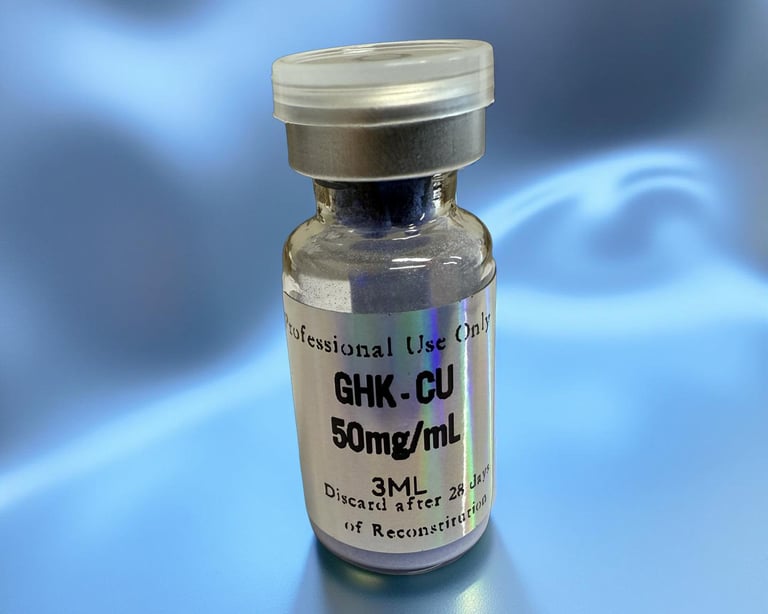
This naturally occurring copper peptide occurs in human plasma; However, as people age, they lose the capacity for production. This tripeptide GHK- CU helps activate wound healing, regulate immune response, act as an anti-inflammatory and antioxidant, and stimulate collagen synthesis. Research points to GHK-CU helping to modulate gene expression with anti-aging benefits.
Properties:
MW= 403.9242 g/mol
Naturally occurring copper complex of GLYCYL-L-HISTIDYL-L-LYSINE peptide.
Has a high affinity for copper
First isolated from human plasma, but also found in saliva and urine
We lose GHK as we age; at age 20, the plasma level of GHK is about 200ng/ml. By age 60, it declines to 80ng/ml.
Decline in GHK coincides with a noticeable decrease in the rejuvenative capacity of an organism
Applications:
Activates wound healing, including gastric
attracts immune cells
Is an antioxidant
Is an anti- inflammatory
Stimulates collagen and glycosaminoglycan synthesis in skin fibroblasts
Modulates the activity of both metalloproteinases and their inhibitors
Improves stem cells
Defends against tumors
Restores replicative vitality to fibroblasts after radiation therapy
Helps regenerate skin; useful for diabetic skin ulcers
In cosmetic products, GHK has been reported to
Stimulate hair growth
Tighten loose skin
Improve elasticity
Improve skin density and firmness
Reduce fine lines and wrinkles
Reduce photodamage and hyperpigmentation
Stimulate nail growth.
Dosage:
1 to 2mg/day for 6-week intervals
can be utilized 3 to 4 times a year
Possible Side Effects:
A possibility of copper toxicity; monitor carefully
The lunula of the nail turns blue (correct over 4 to 6 weeks)
Mild skin irritation (rare, <3% of users)
Temporary copper taste when administered systemically
Possible allergic reaction to copper (very rare)
Minor redness at the injection site
Temporary skin sensitivity to sunlight
Mild burning sensation upon initial topical application
Rare cases of contact dermatitis
Potential blue-green staining at high concentrations
Side Effect Management Strategies:
Nausea: Take with food, smaller meals, and ginger supplements
Vomiting: Slower dose escalation, anti-emetics if severe
Diarrhea: Adequate hydration, probiotics, bland diet
Constipation: Increase fiber intake, adequate fluids, and light exercise
DO NOT USE:
CONTRAINDICATIONS
• Wilson's disease or copper metabolism disorders
• Known allergy to copper compounds
• Severe liver dysfunction
• Active skin infections at the application site
Disclaimer
Reach out anytime for peptide inquiries.
1. Research Use Only: All products provided by Noble-Peptide.com are intended solely for in-vitro laboratory research purposes. These materials are expressly forbidden for any form of human or animal use, ingestion, or administration.
The products offered on this platform are not formulated, designed, or intended to diagnose, cure, mitigate, treat, or prevent any diseases or medical conditions.
2. All products are sold for research, laboratory, or analytical purposes only, and are not for human consumption
Contact
info@noblepeptide.com
© 2025. All rights reserved.