Cargrilintide
Combined with GLP-1 for a more advance appetite suppressant.
1/4/20261 min read
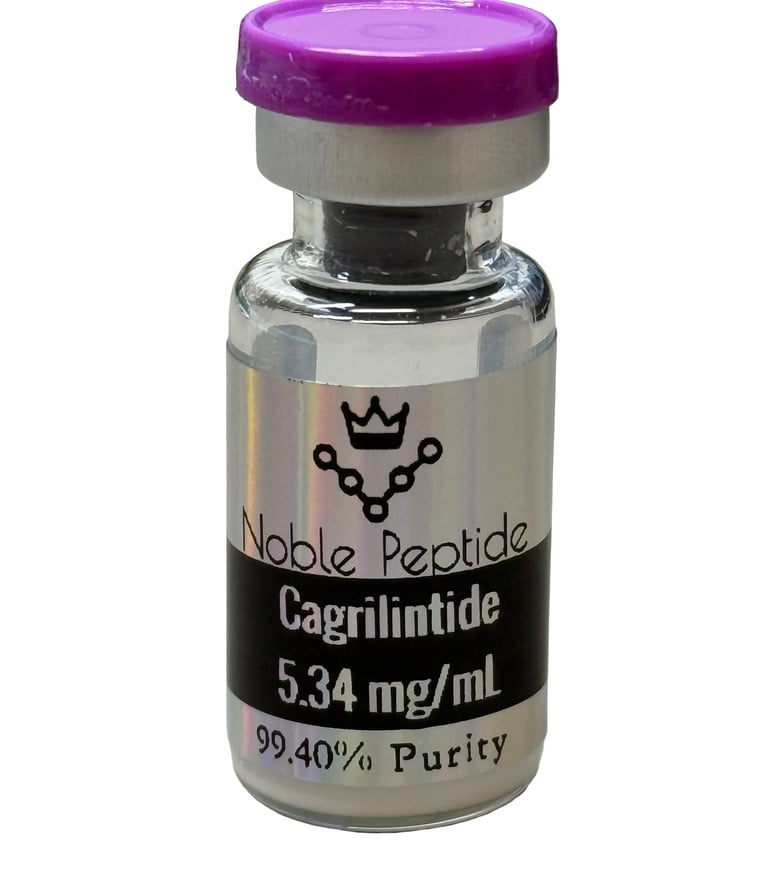
Cargrilinide is a long-acting amylin analogue currently being studied in clinical trials to support weightloss and metabolic health. Amylin is a naturally occurring hormone co-secreted with insulin that helps regulate appetite, gastric emptying, and glucagon levels. Cargilintide mimics these effects with enhanced stability and is typically used as a once- weekly injection. It is especially effective when combined with GLP-1 receptor agonists like sema, tirz, or reta, creating a powerful multi-hormone approach. Together, they significantly suppress appetite, slow digestion, reduce post- meal glucose spikes, and promote metabolic improvements- often leading to greater weight loss than GLP-1s alone. While not yet FDA approved as of 2025, cagrilintide shows strong promise in clinical research, with early results indicating potential for 15% or more total body weight reduction and improvement in glucose control, lipids, and insulin sensitivity.
A lot of people start with 0.25mg of cargrilintide weekly to ease the return of hunger and food noise in the last few days before their next GLP-1 dose. Even at low doses, cargri is very strong and synergistic when combined with GLP agonists like sema, tirz, or reta. As people continue to titrate up on their GLP, they often keep cagri at the same dose long-term. When increasing, it's usually done slowly- 0.25mg>0.5mg>0.75mg to a max of 1mg weekly. Many don't go above 0.5mg>0.75mg because of its potency. It's typically dosed once per week, ideally 3-4 days after the GLP-1 shot to extend appetite control between GLP-1 Doses.
Disclaimer
Reach out anytime for peptide inquiries.
1. Research Use Only: All products provided by Noble-Peptide.com are intended solely for in-vitro laboratory research purposes. These materials are expressly forbidden for any form of human or animal use, ingestion, or administration.
The products offered on this platform are not formulated, designed, or intended to diagnose, cure, mitigate, treat, or prevent any diseases or medical conditions.
2. All products are sold for research, laboratory, or analytical purposes only, and are not for human consumption
Contact
info@noblepeptide.com
© 2025. All rights reserved.