
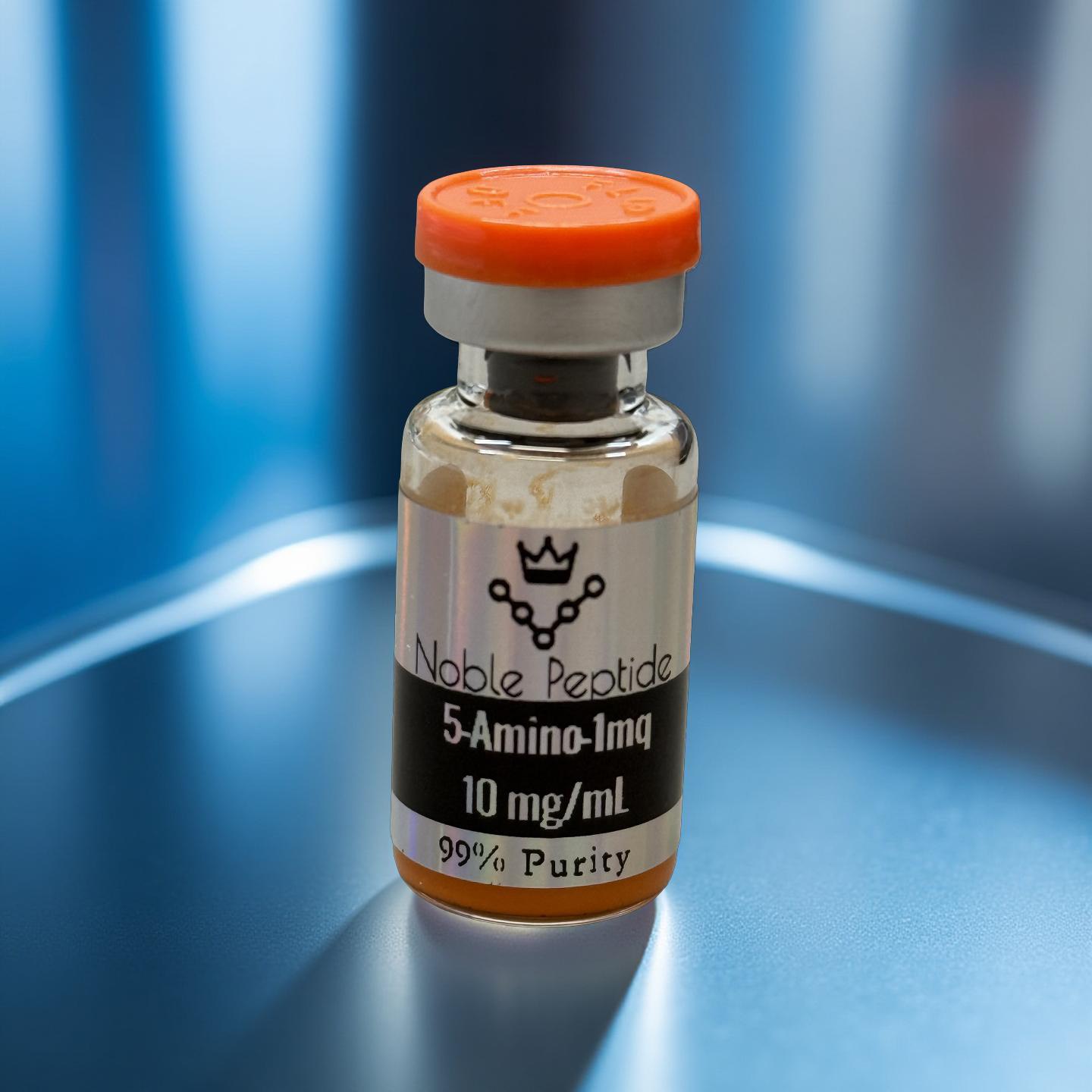
5-Amino-1MQ 5mg
$25.00
Overview
NNMT Inhibition and Metabolic Pathway Research Compound
5-amino-1MQ (5-amino-1-methylquinolinium), a methylquinolinium analogue, is a small peptide inhibitor of the cytosolic enzyme nicotinamide N-methyltransferase (NNMT). NNMT has been associated with obesity and type 2 diabetes and plays an important role in regulating cellular energy homeostasis. Inhibiting NNMT with 5-amino-1MQ has been shown to promote significant weight loss, reduce fat mass and adipocyte size, and lower plasma cholesterol and glucose levels. Methylquinolinium derivatives like 5-amino-1MQ are currently being studied as potential therapies for obesity and diabetes. Additionally, NNMT inhibition may activate stem cells and enhance the regenerative capacity of skeletal muscle.
5-Amino-1 MQ: Structure

Molecular Formula: C₁₀H₁₁N₂
Molecular Weight: 159.21 g/mol
PubChem CID: 950107
CAS Number: 42464-96-0
Synonyms: 5-amino-1-methylquinolinium
Source: PubChem
Mechanistic Background
NNMT catalyzes the methylation of nicotinamide, a key precursor in the NAD+ salvage pathway. Increased NNMT activity has been observed in several metabolic research models and is associated with altered energy expenditure and disrupted NAD+ recycling.
5-Amino-1MQ functions as an NNMT inhibitor in experimental environments. By reducing NNMT catalytic activity, the compound allows researchers to evaluate how limiting nicotinamide methylation influences:
NAD+ availability
Cellular redox balance
Mitochondrial efficiency
Lipid storage and mobilization pathways
In vitro and in vivo experimental models (non-clinical, non-human) have demonstrated that NNMT suppression leads to measurable changes in cellular energy markers and adipocyte behavior. These findings have positioned 5-Amino-1MQ as a useful molecular tool for probing upstream metabolic regulation.
Research Observations and Findings
NNMT Suppression Studies
Experimental models have demonstrated that lowering NNMT activity results in shifts in cellular energy dynamics. Researchers use 5-Amino-1MQ to observe how decreased NNMT expression or function alters metabolic flux without directly stimulating hormones or receptors associated with appetite or growth signaling.
NAD+ Pathway Exploration
NAD+ is a central cofactor involved in oxidative metabolism, mitochondrial respiration, and enzymatic signaling. By preventing excessive nicotinamide methylation, 5-Amino-1MQ allows laboratories to explore how NAD+ recycling efficiency influences cellular resilience and oxidative capacity in controlled systems.
Adipocyte Morphology Research
In mouse-based research models, reduction of NNMT activity has been associated with changes in adipocyte size and lipid storage patterns. These findings have enabled researchers to study fat cell plasticity and energy handling independent of caloric manipulation.
Mitochondrial Function Studies
NAD+ availability directly impacts mitochondrial enzymes involved in ATP generation. Research involving 5-Amino-1MQ often focuses on mitochondrial output, biogenesis markers, and oxidative phosphorylation efficiency within isolated cellular environments.
Role in Sirtuin-Related Research
One area of ongoing investigation involves the indirect relationship between NAD+ levels and sirtuin enzymes, particularly SIRT1. Sirtuins are NAD+, dependent deacetylases involved in transcriptional regulation, stress response, and metabolic adaptation.
By increasing intracellular NAD+ availability through NNMT inhibition, 5-Amino-1MQ enables researchers to examine:
Sirtuin activation markers
Downstream transcriptional adaptations
Cellular stress resistance pathways
These studies are conducted exclusively in laboratory-controlled environments and are not indicative of outcomes in humans or animals.
Key Research Attributes
Highly specific NNMT inhibition profile
Small-molecule stability and consistency
Suitable for metabolic and enzymatic pathway modeling
Compatible with NAD+-focused experimental designs
Non-hormonal mechanism of action
Research Applications
5-Amino-1MQ is frequently used in academic and private laboratory research related to:
Metabolic regulation pathways
Obesity and adiposity models (non-clinical)
Energy expenditure signaling
NAD+ salvage mechanisms
Mitochondrial efficiency and redox balance
Cellular aging and stress response modeling
Inflammation-associated metabolic pathway exploration
Product Specifications
Compound: 5-Amino-1MQ
Quantity: 5 mg per vial
Form: Lyophilized powder
Purity: Research-grade, high-purity standard
Use Classification: Research use only
Each vial is prepared to support precise measurement and repeatable experimental outcomes in controlled laboratory environments.
Storage and Handling (Research Context)
Store in a cool, dry location away from direct light
Maintain appropriate laboratory storage protocols
Reconstituted material should be handled under sterile research conditions
Stability is preserved when stored according to standard laboratory guidelines
Commitment to Research Standards
Licensed Peptides supplies 5-Amino-1MQ strictly for investigative and research purposes. All products are prepared and packaged to meet laboratory expectations, ensuring consistency, stability, and accurate compound identification. No claims are made regarding therapeutic, diagnostic, or biological suitability beyond research use.
Frequently Asked Questions (Research Context)
What is 5-Amino-1MQ?
5-Amino-1MQ is a small-molecule compound explored for its ability to influence cellular metabolism, specifically by inhibiting NNMT (Nicotinamide N-Methyltransferase). When NNMT is blocked, the body may naturally increase NAD+ availability, which supports energy production, metabolic efficiency, and fat loss pathways. Researchers value this molecule for its potential to unlock “stuck” metabolic processes.
What is 5-Amino-1MQ used for in research?
It is used as a molecular tool to study NNMT inhibition and its downstream effects on metabolic and energy-related cellular pathways in controlled experimental models.
Is 5-Amino-1MQ approved for human or animal use?
No. It is strictly designated for laboratory research only and is not approved for human or animal administration.
How does 5-Amino-1MQ affect NNMT activity in experiments?
It inhibits the enzymatic activity of NNMT, allowing researchers to observe changes in nicotinamide metabolism and related cellular processes.
Why is NNMT an important target in metabolic studies?
NNMT influences how cells process nicotinamide, which impacts NAD+ availability and overall metabolic regulation.
What types of studies commonly use 5-Amino-1MQ?
Metabolic pathway research, adipocyte behavior studies, mitochondrial efficiency analysis, and NAD+-related biochemical investigations.
Does 5-Amino-1MQ directly stimulate metabolism?
No. It does not act as a stimulant; it modulates an enzymatic pathway, allowing researchers to observe indirect metabolic changes.
Can this compound be combined with other research materials?
In laboratory studies, it is sometimes used alongside other metabolic or mitochondrial research agents, depending on experimental design.
Is there dosing guidance for research use?
Quantities and concentrations are determined by qualified researchers based on study protocols and experimental requirements.
How stable is 5-Amino-1MQ in laboratory storage?
The lyophilized form demonstrates strong stability when stored correctly under standard laboratory conditions.
What makes 5-Amino-1MQ distinct from NAD+ precursor compounds in research?
Rather than supplying additional precursors, it limits NAD+ depletion by inhibiting NNMT, allowing exploration of upstream metabolic control.
Is this compound considered hormonal or endocrine-active?
No. Available research indicates it operates through enzymatic modulation rather than hormonal pathways.
Why is the 5 mg format commonly used in research?
It provides sufficient material for multiple experimental runs while minimizing waste and supporting precise measurement.
Is 5-Amino-1MQ 5 mg suitable for cell-based research applications?
Yes. The compound is produced as an LPS-free and endotoxin-free research peptide, making it suitable for controlled in vitro and experimental laboratory studies where endotoxin interference must be minimized.
How is endotoxin quality verified for this product?
Each batch of 5-Amino-1MQ is research peptides endotoxin tested, ensuring compliance with laboratory standards for purity and contamination control prior to research use.
What level of purity can researchers expect from this compound?
5-Amino-1MQ 5 mg is supplied as a high-purity research compound, designed to provide consistent and reliable performance across experimental models investigating NNMT-related pathways.
5-AMINO – 1MQ: Research
Obesity
Nicotinamide-N-methyltransferase (NNMT) has emerged as a novel therapeutic target in adipose tissue for the treatment of obesity and type 2 diabetes (T2D). NNMT is a cytosolic enzyme that plays a key role in regulating cellular energy homeostasis by influencing both nicotinamide (NA) metabolism within the NAD⁺ salvage pathway and S-(5′-adenosyl)-L-methionine (SAM) flux within the methionine cycle. Studies have shown that NNMT expression is elevated in the white adipose tissue (WAT) of obese and diabetic mice, with significantly higher activity compared to its levels in brown adipose tissue, liver, and lungs of diet-induced obese mice. Plasma concentrations of the NNMT product 1-methylnicotinamide (1-MNA) have been found to correlate with adipose NNMT expression, body mass index (BMI), and waist circumference, supporting the clinical relevance of this target. Notably, high-fat diet-fed mice treated with antisense oligonucleotides (ASOs) that reduced NNMT expression in adipose tissue were protected from diet-induced obesity and showed lower adiposity compared to control animals.
Through structure-guided design and binding studies, potent small-molecule NNMT inhibitors based on a methylquinolinium (MQ) scaffold have recently been developed. The present study builds on these findings by demonstrating that these NNMT inhibitors are highly membrane-permeable and selective, effectively lowering intracellular 1-MNA levels and inhibiting lipogenesis in vitro. Encouraged by these properties, a proof-of-concept in vivo study was conducted in diet-induced obese mice, showing that systemic administration of the most potent inhibitor reversed obesity by significantly reducing body weight and adiposity, without observable adverse effects.

Improved Metabolic and Liver Health
A longer study (28-day dosing) demonstrated that 5-amino-1-MQ:
Dose-dependently limited body weight and fat gain
Improved glucose tolerance and insulin sensitivity, reducing hyperinsulinemia
Ameliorated hepatic steatosis, reduced liver weight/size, decreased triglycerides
Normalized markers like ALT, AST, and ketone bodies
5-Amino – 1MQ : Scientific Journal & Authors
JoAnne J. Babula, PhD, is a biomedical scientist specializing in metabolic disease and drug discovery. Her research focuses on nicotinamide N-methyltransferase (NNMT) inhibition, where she has demonstrated that small-molecule inhibitors such as the methylquinolinium derivative 5-amino-1MQ can reduce adiposity, improve glucose tolerance, and restore liver health in obese models, supporting their potential as novel therapeutics for obesity and type 2 diabetes.
Referenced Citations
ALL ARTICLES AND PRODUCT INFORMATION PROVIDED ON THIS WEBSITE ARE FOR INFORMATIONAL AND EDUCATIONAL PURPOSES ONLY.
The products available on this website are intended solely for in-vitro research purposes (Latin: “in glass”), meaning they are used in experiments conducted outside a living organism. These products are not medicines or drugs, have not been evaluated or approved by the U.S. Food and Drug Administration (FDA), and are not intended to diagnose, treat, cure, or prevent any disease or medical condition. Any administration to humans or animals, whether by ingestion, injection, or other means, is strictly prohibited by law.